
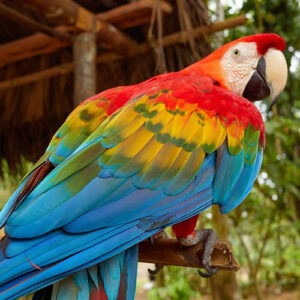
 Embark on a transformative expedition through the living heart of Ecuador, where towering Andean peaks give way to lush cloud forests and the endless green of the Amazon. This carefully designed birding and photography tour leads you through some of the country’s most iconic and species-rich ecosystems, offering close encounters with both rare wildlife and timeless landscapes.
You’ll explore a mosaic of private reserves and biodiversity sanctuaries, each chosen for its photographic potential, ecological importance, and immersive natural beauty. From hummingbird-laden feeders in the misty Chocó to the flooded forests of the Napo Wildlife Center—one of the most biodiverse regions on Earth—this journey goes beyond observation to become a full sensory experience.
Each day reveals a new rhythm of the wild: antpittas dancing in the undergrowth, toucans silhouetted against mountain skies, hoatzins gliding over blackwater lagoons. Whether walking ancient Inca trails, floating through Amazonian creeks, or watching the golden light filter through the canopy, you’ll find yourself in harmony with nature’s quiet pulse.
This is not just a trip—it’s a return to the Earth’s original song.
Upon arrival in Quito (9,350 feet / 2,850 meters), Ecuador’s capital nestled at the base of the Pichincha volcano, you will be welcomed and transferred to a peaceful lodge in the Puembo area—either Jimenita Eco Lodge or Zaysant Lodge. These charming eco-lodges feature quiet gardens and forest patches that offer the perfect chance for guests to begin photographing highland species such as Sparkling Violetear, Black-tailed Trainbearer, Vermilion Flycatcher, and Southern Beardless-Tyrannulet.
For early arrivals, a gentle walk around the lodge trails may yield Rufous-collared Sparrow, Blue-and-yellow Tanager, or even the striking Scrub Tanager. This optional activity is ideal to shake off jetlag, test camera equipment, and begin immersing in the rhythm of the Andes. Dinner is not included, and a short orientation session may be provided in the evening depending on group arrival times.
(No meals inclueded)
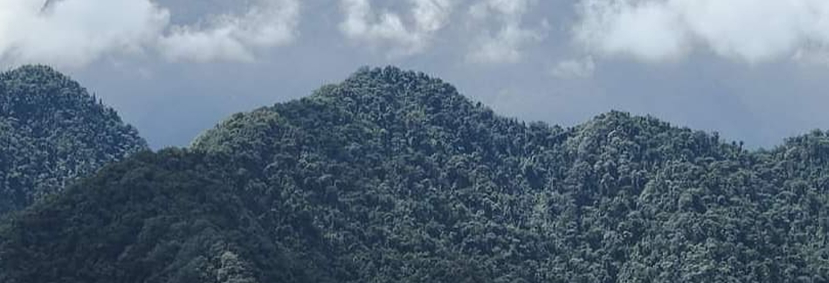
We begin with an early departure for Yanacocha Reserve, perched high on the western flank of the Andes (11,200 feet / 3,400 m). This moss-laden elfin forest is one of the few places on Earth where you may spot the critically endangered Black-breasted Puffleg—Ecuador’s national bird.
While sightings are rare, Yanacocha offers unforgettable encounters with sword-billed hummingbirds, Great Sapphirewing, Shining Sunbeam, Tyrian Metaltail, Buff-winged Starfrontlet, and Golden-breasted Puffleg. The Trocha Inca trail provides excellent light for photography of both hummingbirds and breathtaking landscapes.
As we hike along the scenic trail, mixed flocks may offer sightings of White-throated and White-banded Tyrannulets, Superciliaried Hemispingus, Pearled Treerunner, and various mountain-tanagers including the gorgeous Scarlet-bellied, Black-chested, and Hooded.
After lunch at the reserve, we continue westward, descending the scenic and biodiverse Nono-Mindo Eco Road. This winding descent offers photographic stops and short walks at strategic points, such as Mirador Giaycapi, where species like the Plate-billed Mountain-Toucan, Masked Trogon, or even the elusive White-faced Nunbird may appear.
By late afternoon, we reach the lush lower montane forests of Mindo and settle into Sachatamia Lodge, nestled in the heart of the cloud forest. Its feeders are alive with dazzling hummingbirds like Empress Brilliant, Velvet-purple Coronet, Booted Racket-tail, Violet-tailed Sylph, and Brown Violetear. Overnight stay at Sachatamia. (B, L, D)
This morning we head to the spectacular Amagusa Reserve, located near the Mashpi area in the heart of the Chocó-Andean biodiversity corridor. This reserve is a haven for photographers and birders alike, featuring well-maintained trails, shaded observation decks, and hummingbird feeders that attract a dazzling array of species.
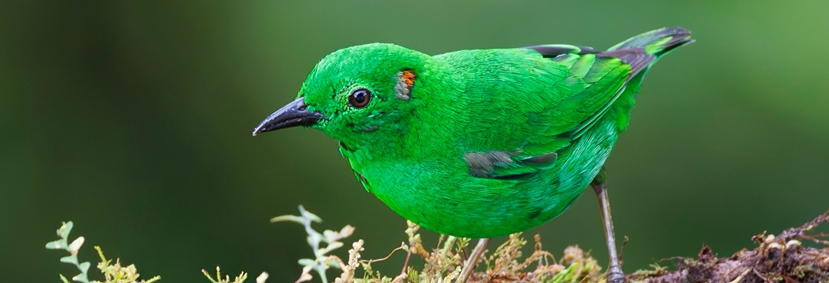
Our primary targets here include Chocó endemics such as Glistening-green Tanager, Moss-backed Tanager, Black-chinned Mountain-Tanager, Orange-breasted Fruiteater, Indigo Flowerpiercer, and Golden-collared Honeycreeper. The feeders and forest edges also offer striking species like the Velvet-purple Coronet, Booted Racket-tail, Violet-tailed Sylph, and Empress Brilliant. Mixed-species flocks frequently sweep through the area, creating bursts of photographic action.
After a flexible lunch (either box lunch or at the nearby Sacha Guatusa reserve), we move to Sacha Guatusa, a smaller private site with excellent feeder setups. This quieter setting is ideal for capturing close-up shots of Crimson-rumped Toucanet, Fawn-breasted Tanager, Green-crowned Brilliant, and Brown Inca. The garden surroundings may also yield White-shouldered Tanager, Golden-naped Tanager, and Rufous-tailed Hummingbird.
Late in the day we return to Sachatamia Lodge, where guests can enjoy an evening edit session or casual birding around the lodge grounds. (B, L, D)
We dedicate this morning to a focused photography session at the Sachatamia hide, a shaded and intimate setup designed for capturing hummingbirds and forest-edge species with ideal light and natural perches.
Species regularly photographed here include Green-crowned Brilliant, Purple-bibbed Whitetip, White-whiskered Hermit, Brown Violetear, and the iridescent Velvet-purple Coronet. The lighting is particularly favorable in the early morning, and subjects often include tanagers, flowerpiercers, and motmots.
Breakfast at Sachatamia. Lunch will be arranged based on the chosen destination, in coordination with your guide to ensure the best logistical and culinary experience:
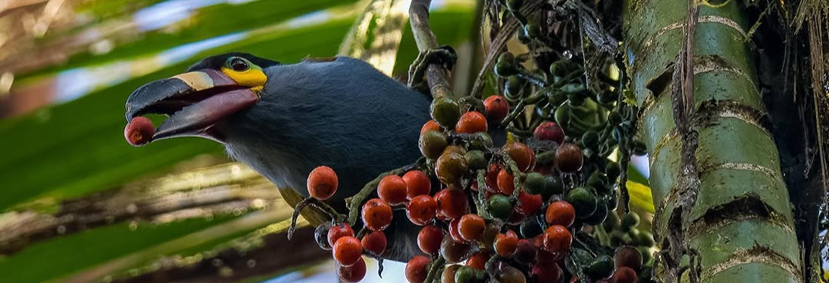
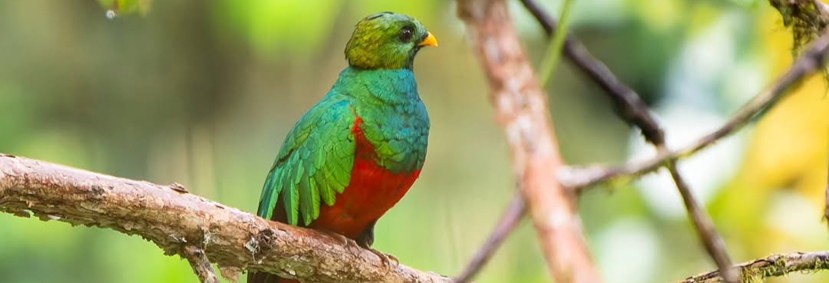
Option 1: Giaycapi Lodge – Located at mid-elevation in the Mindo Valley, this reserve offers excellent photographic access to one of the most sought-after cloud forest species—the Plate-billed Mountain-Toucan. Visitors may also encounter Golden-headed Quetzal, Masked Trogon, and Strong-billed Woodcreeper. The feeders attract Blue-winged Mountain-Tanager, Flame-faced Tanager, and Black-capped Tanager. The open surroundings and vertical light gaps make this a rewarding spot for telephoto work.
Option 2: Punto Ornitológico (Alcíbar Zaragozín) – A quieter riverside site ideal for photographing riparian specialists such as the elusive Sunbittern, White-capped Dipper, and Torrent Tyrannulet. The trails here also provide views of Crested Guan, Barred Hawk, and occasionally Cloud-forest Pygmy-Owl. This destination is preferred for those focused on capturing unique behaviors and habitat context.
After the excursion, we return to Sachatamia Lodge in the late afternoon. Time permitting, guests may relax on the observation decks, review their photography from the day, or enjoy the last light of the cloud forest from the comfort of the lodge. (B, L, D)
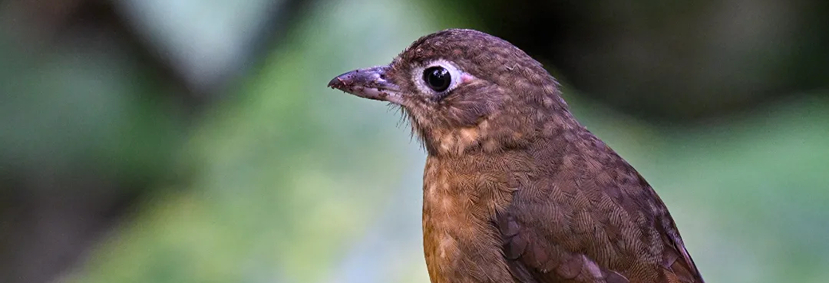
We depart before sunrise for Refugio Paz de las Aves, located in the forested hills near Nanegalito. This world-renowned private reserve is a shining example of community-based conservation, spearheaded by Ángel Paz, who famously built trust with some of Ecuador’s most elusive forest dwellers.
Our day begins at a Cock-of-the-Rock lek, where bright-orange males gather to perform their ritualistic displays in the morning mist—a spectacle of sound, color, and primal energy. As dawn breaks, we follow Ángel and his team through a network of forest trails in pursuit of the reserve’s iconic residents: Giant Antpitta, Moustached Antpitta, Yellow-breasted Antpitta, and possibly Ochre-breasted and Chestnut-crowned Antpittas. These birds, once nearly impossible to see in the wild, now appear just meters away from camera lenses.
Other avian highlights include Andean Guan, Crimson-mantled Woodpecker, Golden-headed Quetzal, Toucan Barbet, and Olivaceous Piha. The reserve’s trails also host fruiting trees that attract mixed flocks of tanagers, and its hummingbird feeders welcome visitors such as Buff-tailed Coronet, Speckled Hummingbird, and Gorgeted Sunangel.
A traditional breakfast is served on-site, often overlooking a hummingbird garden. Lunch will be coordinated en route or upon return to Quito, depending on timing and group preference. After a relaxed and rewarding morning, we return to Quito in the early afternoon.
The drive ascends through cloud forest and returns us to the highlands, with opportunities for scenic photography en route. Overnight at Jimenita Eco Lodge or Zaysant Lodge, where guests can rest, back up photos, and prepare for Antisana the following day. (B, L)
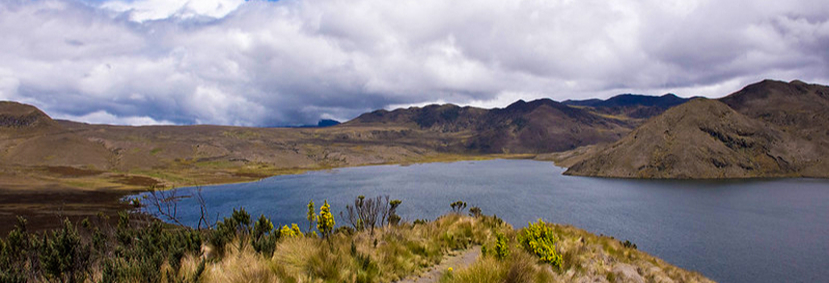
After breakfast at Jimenita Eco Lodge, we head southeast toward the high Andean páramo of Antisana Ecological Reserve—one of the most spectacular highland landscapes in Ecuador. Towering above the plains, the snow-capped Antisana Volcano dominates a region of open grasslands, glacial lakes, and rugged ridges that serve as critical habitat for emblematic species of the Andes.
Our main birding destination this morning is La Mica Lake, a serene glacial lagoon nestled within the upper reserve. The lake’s clear waters and surrounding moorlands offer excellent opportunities to spot high-altitude waterbirds such as Silvery Grebe, Andean Teal, Yellow-billed Pintail, and Andean Gull.
Along the surrounding ridgelines, we scan the skies for Andean Condors soaring on thermals, while the open páramo may yield sightings of Carunculated Caracara, Tawny Antpitta, Many-striped Canastero, and the striking Ecuadorian Hillstar feeding on low shrubs. Other possible highlights include Black-faced Ibis, Stout-billed Cinclodes, and raptors like the Black-chested Buzzard-Eagle or Aplomado Falcon surveying the terrain from above.
Following a rewarding morning of birding amid breathtaking volcanic scenery, we enjoy lunch at a local restaurant before continuing our journey eastward. By mid-afternoon, we descend to the lush cloud forests surrounding Termas de Papallacta, a comfortable hot springs lodge nestled in a secluded mountain valley.
The rest of the afternoon is open for soaking in the thermal pools, photographing hummingbirds in the gardens, or relaxing with views of the surrounding forested slopes. (B, L)
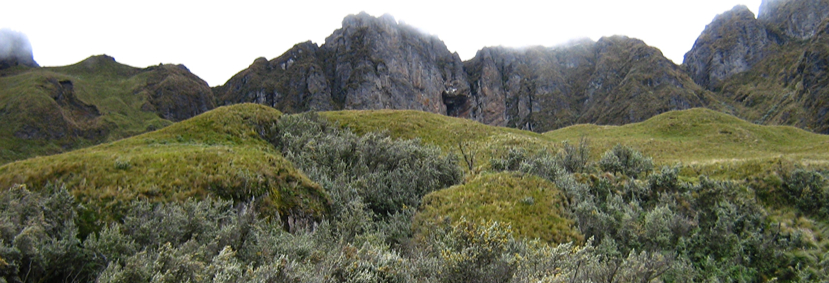
We begin early with a drive toward the high páramo landscapes of Cayambe Coca National Park, located just above Termas de Papallacta. This stark yet stunning environment, sitting at elevations above 12,000 feet (3,600 meters), offers a completely different birding experience—set among rolling grasslands, scattered Polylepis woodlands, and glacial-fed lakes.
Our primary goal is to find high-Andean specialties such as Ecuadorian Hillstar, Tawny Antpitta, Carunculated Caracara, and the cryptic Many-striped Canastero. Other possible species include Andean Tit-Spinetail, Chestnut-winged Cinclodes, Rufous-bellied Seedsnipe, and Stout-billed Cinclodes. Overhead, we scan for soaring Andean Condors, Variable Hawk, and Black-chested Buzzard-Eagle.
We make slow progress along the páramo tracks to allow for photography, as the light and scenery here are unique. Optional pre-dawn departure may be arranged to catch the golden hour as the sun rises over the high ridges.
After a morning of exploration, we return to Termas de Papallacta for lunch and a restful afternoon. Guests may choose to unwind in the therapeutic hot springs, take photos of the garden hummingbirds such as Shining Sunbeam and Great Sapphirewing, or enjoy a final checklist session with the group.
This relaxing day in the high Andes offers both dramatic scenery and the last opportunity to capture rare highland species in your lens. (B, L)
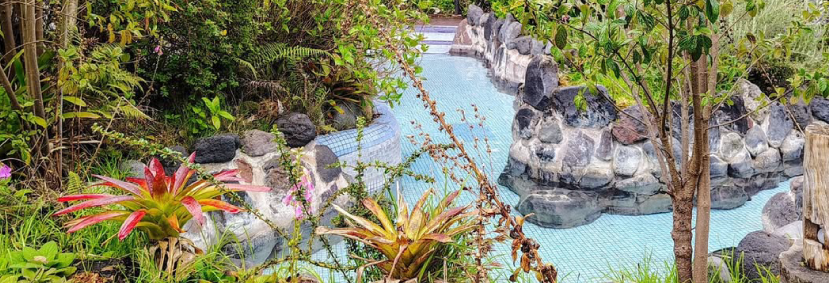
After breakfast at Termas de Papallacta, we begin our descent toward the eastern slopes of the Andes. Our first stop is Guango Lodge, located at 2,700 meters (8,900 ft) in the temperate forest zone, renowned for its remarkable hummingbird diversity and photogenic river valley.
At Guango’s well-stocked feeders, we’ll have opportunities to photograph iconic species such as Sword-billed Hummingbird, Tourmaline Sunangel, White-bellied Woodstar, Buff-winged Starfrontlet, and Tyrian Metaltail. A short walk along the nearby trails or riverside may reveal specialties like Torrent Duck, White-capped Dipper, and Masked Trogon, as well as mixed flocks including Cinnamon Flycatcher, Black-capped Hemispingus, and Mountain Wren.
We enjoy lunch at the lodge and continue our journey down the eastern slope, following a scenic route through montane forest and river valleys. By mid-afternoon, we arrive at Cabañas San Isidro, located at 2,050 meters (6,800 ft) in the heart of the Quijos Valley. After check-in, the rest of the day is open for birding around the lodge grounds and trails.
San Isidro’s feeders often attract Collared Inca, Chestnut-breasted Coronet, Fawn-breasted Brilliant, and Speckled Hummingbird, while forest edges may yield Montane Woodcreeper, Slate-throated Whitestart, and the bold Inca Jay. As evening approaches, we keep an eye out for the lodge’s most famous resident—the San Isidro Owl, an enigmatic species likely new to science, frequently seen hunting near the cabins.
Dinner is served in the rustic main house, followed by a relaxed checklist session and conversation beside the fire. (B, L, D)
Today is devoted to exploring the rich montane forests surrounding San Isidro Lodge, one of Ecuador’s most productive birding hotspots. With over 300 species recorded in the area and easy access to a variety of elevational zones, this site offers exceptional opportunities for both forest birding and creative photography.
We begin with morning walks along the lodge’s private trails and forested roads, where mixed flocks often produce a vibrant flurry of activity. Typical sightings include Crimson-mantled Woodpecker, Montane Foliage-gleaner, Black-billed Peppershrike, Cinnamon Flycatcher, White-tailed Tyrannulet, and the dazzling Saffron-crowned Tanager. The undergrowth is ideal for spotting secretive ground dwellers such as Slate-crowned Antpitta, White-bellied Antpitta, and Ash-colored Tapaculo.
After lunch at the lodge, guests may choose to continue birding around the trails or join an optional afternoon excursion tailored to specific interests and target species:
Option 1: Las Brisas – Located at a slightly lower elevation, Las Brisas offers more open terrain and chances to see Masked Trogon, Green Jay, Highland Motmot, and possibly the striking Red-hooded Tanager. A box lunch is provided for this outing.
Option 2: Quetzal Ridge – For those staying closer to the lodge, this higher elevation trail system winds through misty forest and offers excellent views of Golden-headed Quetzal, Powerful Woodpecker, and Long-tailed Antbird, with opportunities for landscape photography as well.
We return to the lodge in the late afternoon. As dusk settles over the forest, we once again listen and watch for nocturnal activity near the cabins. Highlights may include Rufous-banded Owl, Andean Potoo, and—with luck—a repeat encounter with the mysterious San Isidro Owl.
Dinner is served in the main house, followed by a relaxed checklist session and fireside conversation. (B, L, D)
After breakfast at San Isidro Lodge, we begin our journey southeast toward the lush Andean foothills of eastern Ecuador. This scenic overland transfer descends gradually from the subtropical forest of the Quijos Valley into warmer, more humid elevations, where the landscape shifts toward the edge of the Amazon basin.
Along the way, we make strategic birding stops at forested sections of the road and river overlooks, scanning for raptors such as Barred Hawk, Black Hawk-Eagle, or Swallow-tailed Kite, as well as possible sightings of Andean Motmot, Golden-olive Woodpecker, and Green-backed Hillstar. If conditions and group energy allow, we may explore short trails or stop at a lookout for photography and species scouting.
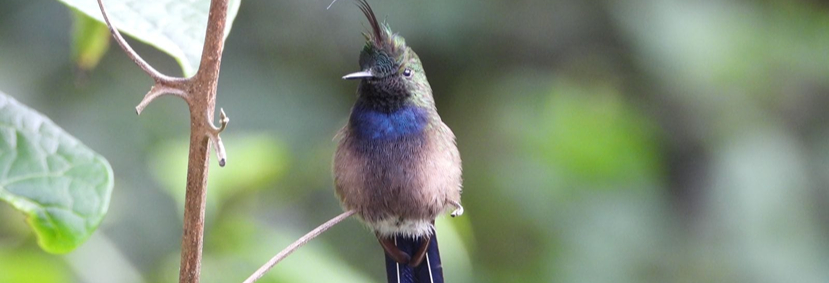
By mid-afternoon, we reach Wild Sumaco Lodge, perched at 1,500 meters above sea level and nestled within a lush transition zone between Andean and Amazonian ecosystems. The lodge grounds, surrounded by forest and gardens, are already alive with activity. Feeders near the main house attract hummingbirds such as Violet-headed Hummingbird, Golden-tailed Sapphire, Wire-crested Thorntail, and Sparkling Violetear, offering perfect light and proximity for photographers.
After check-in and some rest, we enjoy a short walk around the lodge’s immediate surroundings. Species like Blue-rumped Manakin, White-tipped Sicklebill, Olive-backed Woodcreeper, and Golden-eared Tanager are often seen nearby. As night falls, we listen for the calls of Blackish Nightjar, Common Pauraque, or even the haunting cry of a distant Spectacled Owl.
Dinner is served at the lodge’s panoramic dining area, followed by a relaxed planning session for tomorrow’s full day of exploration. (B, L, D)
Today is devoted entirely to exploring the remarkable biodiversity surrounding Wild Sumaco Lodge, a hidden gem nestled in one of the least-disturbed birding regions of Ecuador. Located in a unique ecological transition zone between the Andean foothills and the upper Amazon basin, this reserve provides access to an exceptional mix of endemic, range-restricted, and Amazon-influenced species.
We begin the day with a dawn session at the lodge’s feeders and garden trails, where the soft morning light offers ideal conditions for photography. Species frequently visiting the feeders include Golden-tailed Sapphire, Rufous-vented Whitetip, Gorgeted Woodstar, Many-spotted Hummingbird, and Wire-crested Thorntail, while the surrounding vegetation often reveals Booted Racket-tail, Sparkling Violetear, and Andean Cock-of-the-rock calling from hidden perches.
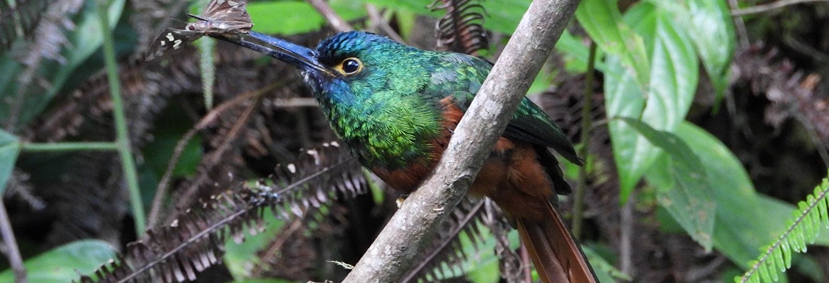
As we venture onto the reserve’s network of forest trails and roadside viewpoints, we focus on locating specialties such as Coppery-chested Jacamar, Foothill Elaenia, Scarlet-breasted Fruiteater, Gray-tailed Piha, and Black-streaked Puffbird. Understory flocks may include Chestnut-crowned Foliage-gleaner, White-crowned Tapaculo, Rufous-rumped Antwren, and Scale-backed Antbird, while fruiting trees attract flocks of Turquoise Tanager, Bay-headed Tanager, and Golden-eared Tanager.
A flexible lunch break—either at the lodge or in the field—allows us to adapt to lighting, weather, and wildlife activity. In the afternoon, we continue birding across varied microhabitats and elevations, maximizing chances to spot elusive species like the Lined Antshrike, Plain-backed Antpitta, or even a group of Military Macaws crossing overhead.
Before sunset, we return to the lodge for a final photography session or casual birding around the cabins. As evening falls, we listen for nocturnal sounds—Blackish Nightjar, Mottled Owl, or Amazon Tree Boa—and for those interested, a night macro session or spotlighting walk can be arranged with the guide.
Dinner is shared back at the main lodge, with time to update our species checklist and reflect on the spectacular encounters of the day. (B, L, D)
After an early breakfast at Wild Sumaco Lodge, we begin our journey toward the Amazon Basin, transitioning from the foothills of the eastern Andes into one of the most biologically rich areas on Earth: Yasuní National Park. Our descent follows a winding road through lush forested hills before reaching the tropical lowland town of Coca (Puerto Francisco de Orellana).
Along the way, we make strategic stops to scan for species such as Roadside Hawk, Swallow-tailed Kite, and possibly Blue-headed Parrot or Yellow-rumped Cacique along the forest margins. The shift in climate is striking as we leave the cool highlands behind and enter the warm, humid embrace of the Amazon.
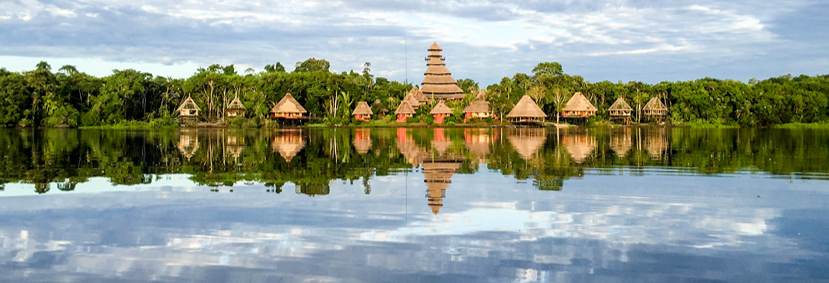
Upon arrival in Coca, we meet the expert staff from Napo Wildlife Center (NWC), a pioneering community-run eco-lodge located deep inside Yasuní. After a short transfer to the dock, we board a covered motorized canoe for a scenic two-hour ride down the Napo River, where sightings may include Cocoi Heron, Amazon and Ringed Kingfishers, Black Caracara, and Greater Yellow-headed Vulture.
At the NWC landing point, we switch to paddle canoes, gliding silently along a blackwater creek through Mauritia palm forest. This two-hour journey is a visual and acoustic immersion into the Amazon, often yielding views of Hoatzins, Red-capped Cardinals, Straight-billed Woodcreepers, and Black-capped Donacobius, with occasional appearances by monkeys, sloths, or toucans.
We arrive at Añangu Lake in the afternoon, where the lodge sits quietly at the water’s edge. After a welcome drink and orientation, guests have time to relax or explore the immediate surroundings. The lakefront and gardens host species such as Yellow-rumped Cacique, Violaceous Jay, Silver-beaked Tanager, and various herons and flycatchers.
Dinner is served in the open-air dining area, surrounded by the ambient sounds of frogs, insects, and night birds—the pulse of the Amazon in full rhythm. (B, BL, D)
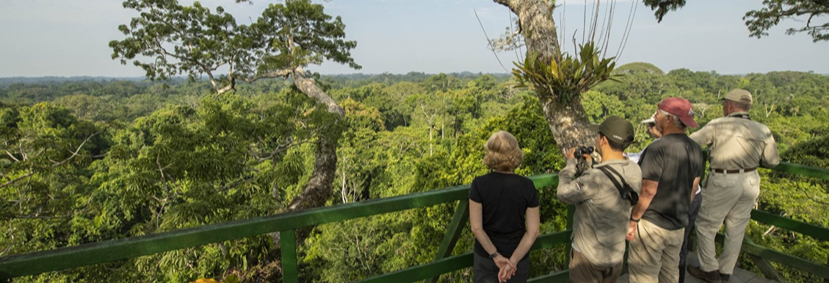
We rise before dawn and embark on a short canoe journey and forest walk to reach the iconic canopy observation tower, one of the highlights of birding in the Amazon. This 36-meter-high structure, built around a massive Ceiba tree, provides sweeping views above the rainforest canopy and unmatched access to a vibrant aerial ecosystem.
From this elevated perch, we watch as the forest awakens. Blue-and-yellow Macaws, White-throated Toucans, and Ivory-billed Aracaris glide past at eye level. Mixed flocks of canopy tanagers like Paradise Tanager, Opal-rumped Tanager, and Green-and-gold Tanager fill the treetops. With luck, we may also see Amazonian Umbrellabird, Purple-throated Fruitcrow, and Plum-throated Cotinga, while spider monkeys forage nearby.
After breakfast back at the lodge, we explore a pristine terra firme forest trail through ancient hardwood stands, seeking understorey specialists like Rufous-capped Antthrush, Scale-backed Antbird, White-plumed Antbird, and Golden-headed Manakin. The photography here is more challenging but deeply rewarding, capturing species in their natural dark understory habitat.
After dinner, guests may opt for a night photography walk in the vicinity of the lodge to encounter and photograph frogs, insects, and nocturnal creatures like the Great Potoo, Amazon Tree Boa, or the elusive Night Monkey. (B, L, D)
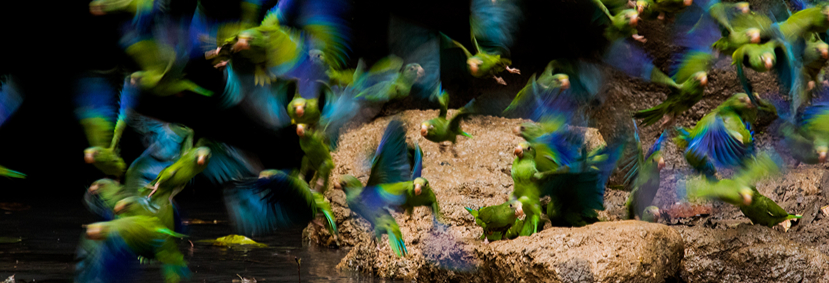
Today we head downriver at dawn to witness one of the Amazon’s most awe-inspiring avian spectacles: the clay lick at Yasuní. Weather permitting, we visit a single site where hundreds of Mealy Amazons, Blue-headed Parrots, Yellow-crowned Parrots, and Dusky-headed Parakeets descend on mineral-rich clay walls in an explosion of sound and color.
These sites are vital for bird health and offer rare opportunities for dramatic flight and behavior photography.
After the clay lick, an optional visit to the Añangu Kichwa Interpretation Center is available for those interested in learning about the traditions and sustainable practices of the local Kichwa community. This cultural experience offers meaningful context and supports community-based conservation efforts.
We return to the lodge in the afternoon for relaxed birding along the lake and lodge trails. Highlights often include Hoatzins, Capped Heron, Silvered Antbird, and Yellow-rumped Cacique. Photographers may also find rewarding close-up moments with butterflies, amphibians, or lodge-edge flora. (B, L, D)
After an early breakfast at the lodge, we begin our journey out of the Amazon. A peaceful paddle canoe ride takes us through the blackwater creek, offering a final moment of quiet immersion in the rainforest. The sounds and reflections of the jungle accompany us as we glide toward the Napo River.
At the main dock, we transfer to a motorized canoe and travel upstream to the town of Coca. A box lunch will be provided for the journey to ensure comfort and flexibility during the transfer and airport process.
Upon arrival in Coca, we board a domestic flight back to Quito. Depending on international flight schedules, there may be time to rest at a nearby hotel or airport lounge before your transfer to Mariscal Sucre International Airport for departure.
This final day marks the end of a journey across Ecuador’s most iconic ecosystems—from volcanic peaks and cloud forests to the heart of the Amazon. (B, BL)